Cheap Clothes, Real Costs: Is That $8 T-Shirt Actually a Good Deal?
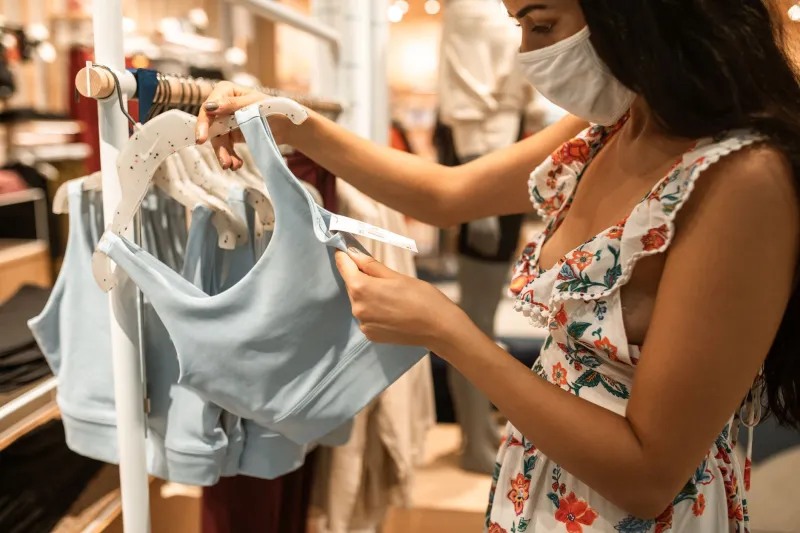
There's a $8 t-shirt in your cart right now. Maybe it's from one of those online retailers with the suspiciously low prices and the 3-week shipping window. Maybe it's a clearance rack find. Either way, you're looking at it and thinking: how is this possible?
That's actually the right question to be asking — because how it's possible matters a lot for whether you're actually getting a deal.
Let's be upfront: this isn't a lecture. Buying affordable clothes is completely reasonable, especially when budgets are tight. But "affordable" and "good value" aren't always the same thing, and the gap between them is worth understanding before you click add to cart.
The Math That Doesn't Add Up
When a shirt retails for $8, every single cost involved in making it — fabric, labor, shipping, packaging, retailer markup, marketing — has to fit inside that $8 and still leave room for profit. Something, somewhere, is being squeezed.
Sometimes it's material quality. Fast fashion fabrics are frequently made from the cheapest available polyester blends, which wear out faster, pill more quickly, and generally look noticeably worse after a handful of washes. A shirt that costs $8 and survives five washes before going threadbare isn't cheaper than a $30 shirt that lasts three years. The math just works differently than the price tag suggests.
Other times, the squeeze happens further up the supply chain — in the wages paid to garment workers in overseas factories, or in the environmental shortcuts taken during production. Those costs are real. They're just paid by someone other than you at checkout.
None of this means you should never buy inexpensive clothing. It means you should go in with clear eyes.
When Cheap Actually Is Smart
Here's the honest truth that gets lost in conversations about fast fashion: sometimes buying cheap makes total sense. Context matters enormously.
Kids' clothing is the most obvious example. Children grow out of clothes so fast that durability is almost irrelevant. A $10 pair of kids' jeans that lasts one season is a perfectly rational purchase. Spending $45 on "quality" denim for a six-year-old who'll outgrow them in four months is the less smart financial decision.
Trend-driven pieces are another case where budget buys make sense. If you want to try a style that's hot right now but might feel dated in 18 months — an oversized blazer in a specific color, a particular silhouette — buying an inexpensive version lets you experiment without overcommitting. If it works, great. If the trend fades, you're not out $80.
Basics that get replaced regularly — gym socks, plain undershirts, casual loungewear — often don't need to be premium purchases. These are consumable items. Buy them affordably, replace them when they wear out, move on.
The problem starts when we apply bargain-price logic to everything, including items where quality and longevity actually matter.
Where the Cheap Formula Breaks Down
There are categories of clothing where buying cheap tends to backfire, both financially and practically.
Work and professional wear is a big one. A suit or blazer you'll wear twice a week for two years needs to hold up structurally and look presentable throughout. Budget professional clothing often loses its shape quickly, develops fabric stress at the seams, and can look visibly worn within months. Replacing a $40 blazer every six months costs more annually than buying a $150 one that lasts three years.
Shoes are another category where cost-per-wear math strongly favors quality. Cheap shoes wear down faster, offer less support, and can actually cost you more in the long run — both financially and physically. This is especially true for everyday footwear.
Outerwear — coats, winter jackets, rain gear — is meant to protect you and last multiple seasons. A $35 winter coat from a fast fashion retailer might look fine on the rack but provide minimal warmth and fall apart by February. A well-made coat bought on sale for $120 is almost always the better deal over a three-to-five year horizon.
The Environmental Angle (Without the Guilt Trip)
It would be dishonest to write about ultra-cheap clothing without mentioning the environmental piece, but let's keep it practical rather than preachy.
The fashion industry is one of the world's largest polluters, and the ultra-fast end of the market — brands that drop thousands of new styles weekly at near-disposable prices — accelerates the problem significantly. Clothes bought cheaply and discarded quickly end up in landfills at enormous scale. The EPA estimates Americans throw away about 11.3 million tons of textile waste per year.
For shoppers who care about this, the most practical response isn't necessarily spending more — it's buying less and making more deliberate choices. Secondhand shopping (ThredUp, Poshmark, local thrift stores) is one of the most genuinely budget-friendly and environmentally sound options available. You can find quality pieces at low prices without the ethical baggage of new ultra-fast fashion.
How to Spot a Bargain That's Actually Worth It
Whether you're shopping online or in-store, a few quick checks can help you separate real value from the illusion of savings.
Check the fabric content. Natural fibers like cotton, linen, and wool generally hold up better and feel more comfortable than synthetic blends — though some synthetics (like nylon in activewear) are perfectly appropriate. A shirt that's 100% polyester for $8 is likely to look and feel cheap quickly.
Examine the construction. Pull gently at the seams. Check that buttons are secure. Look at the stitching — uneven or loose stitching is a sign of rushed manufacturing. These details predict how something will hold up.
Read the reviews, specifically the ones that mention washing. How a garment looks after multiple washes is the real test. Reviews that mention shrinking, fading, or pilling after a few cycles are red flags.
Calculate cost per wear. Divide the price by the number of times you realistically expect to wear it. A $60 dress you'll wear 30 times costs $2 per wear. A $15 dress you wear twice costs $7.50 per wear. The expensive one is the better deal.
The Verdict
There's no universal answer to whether cheap clothes are worth it — because "worth it" depends entirely on what you're buying and why. The smartest shoppers don't apply one rule to everything. They ask the right questions, buy intentionally, and look for deals that deliver actual value rather than just a low number on a price tag.
At TopShop Deals, we're all about helping you get more for your money — and sometimes that means pointing out when the cheapest option isn't actually the smartest one. Real deals save you money over time. Everything else is just a low price.